Who Are We to Hinder God?

Sunday, May 19, 2019

A sermon on Acts 11:1-18 and Revelation 21:1-6

As many of you may know, I am currently in the process of becoming a postulant to the priesthood in the Episcopal Church. I have been lucky enough to be sponsored for priesthood by this Gambier parish and by Rachel Kessler. The support of the Harcourt community has been invaluable to me thus far, especially because the road to postulancy – though important in aiding discernment – can at times feel lengthy, demanding, and stressful. Throughout the process, I’ve been asked to lay bare much of who I am for the Church to examine. I’ve been asked to tell my life story with honesty and transparency, and to include in that telling, not only my triumphs and the times I have felt closest to God, but also the parts of my story that are hardest to tell – the moments that inspire more embarrassment than pride; the setbacks, the failures, the mistakes, the painful periods, the parts I wish most to hide.
Continue reading “Who Are We to Hinder God?”

Fear, Choice, & the Way of the Cross

Palm Sunday, April 14 2019

A sermon on the Passion Gospel of Luke

A couple weeks ago, I joined some Rockwell and Deaconess Anne House folks at Holy Communion’s Theology on Tap about Harry Potter. It was a great time – as I’m sure you’ve heard, Mike Angell was wearing a cape! At the event, we discussed some of the spiritual themes of JK Rowling’s masterpiece, and the ways in which Harry’s story has spoken to us throughout our lives. To be honest, I was mostly there for the Harry Potter trivia.

And then someone helpfully and casually mentioned that Harry Potter’s walk to his death in the last book shares some associations with Christ’s own journey to the cross. Harry, like Jesus, had to come to terms with the inevitability of his death. Harry, like Jesus, grieved his destiny. But Harry, like Jesus, chose to selflessly surrender himself to it.

Continue reading “Fear, Choice, & the Way of the Cross”

By Reflected Light: Christ’s Transfiguration, the UMC, & Vulnerability

Sunday, March 3, 2019

A sermon on 2 Corinthians 3:12-4:2 and Luke 9:28-36

This past weekend, the United Methodist Church gathered here in St. Louis for a special meeting of their General Conference. UMC delegates traveled from across the country and the world to this state to meet and try to find a way forward on issues of human sexuality – specifically, on the questions of the ordination of gay clergy and same-sex blessings. As a community, they heard testimonies and proposals, and voted on the future of their church. They were open and vulnerable with one another. They said and heard difficult things.

As you may have learned, the outcome of their meeting, though unsurprising, was a disappointing reminder of the divisions that still exist within the body of the church, and of the desire of many to stem the flow of progress toward full inclusion of all God’s children in the life and work of the Church.

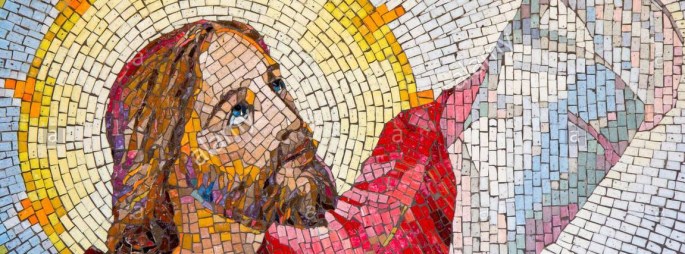
We are here this weekend to celebrate Christ’s transfiguration: a joyous occasion, a true miracle. This morning, we tell the story of the Son of Man, revealed in his glory to some of his dearest friends. This is a story of amazement, of God’s beauty and power, of Jesus truly seen for all that he is – our savior and our king. But I cannot help that, as I prepared to speak today, my mind kept returning to the Methodists, and to the events of last weekend.

Continue reading “By Reflected Light: Christ’s Transfiguration, the UMC, & Vulnerability”

God is not a Realist: On Hope and Proclamation

Sunday, January 27, 2019

A sermon on Ezra 3:10-13 & Luke 4:14-21

There is something very spectacular about a beginning. Driving to work on the first day of a new job, hearing a candidate’s opening remarks at the start of a campaign, leaving home for freshmen year of college, watching construction begin on a long-awaited project, getting up to deliver your first sermon – these moments can be exciting, terrifying. Wonderful, hard.

Our readings for this week are overwhelmingly concerned with beginnings: in Ezra, the laying of the foundations for the second temple in Jerusalem; and in the Gospel of Luke, the first recorded sermon of Christ’s ministry.

Ezra’s story in particular does an excellent job capturing the emotional ambiguity that can so often surround moments of beginning, and the truth that, many times, a beginning does not stand alone but in the context of both excitement and disappointment, profound hope and bittersweet sadness. The combination of weeping and joyous shouts that follow the Judeans’ praise of God most likely feels familiar to those of us who have ever had to leave what is comfortable and lovely for a new opportunity, or come to terms with frustrated expectations.

Continue reading “God is not a Realist: On Hope and Proclamation”

Embodiment and the Christian Life

Wednesday, December 5, 2018

A sermon on John 6:53-63

In reading the Gospels, it can often be easy for us to playfully mock Christ’s disciples when they seem to ask stupid questions of him, or miss his point on core theological issues. But I think I can speak for a lot of folks in saying that I find myself sympathetic to the disciples in this passage as they question Jesus again on his teaching concerning the Eucharist and the physical consumption of his body and blood. “This teaching is difficult,” they say. And indeed it is! Debates about sacramental theology aside, there is something very challenging in what Christ is saying here, and in his repeated assurance that no, he is not speaking metaphorically about his flesh and blood.

Continue reading “Embodiment and the Christian Life”

Sermon for Two Lost Sons

Sunday, March 6, 2016

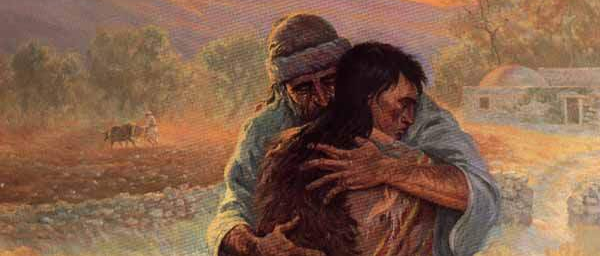
The story of the Prodigal Son is one of my favorite stories in the New Testament, and I think that’s because it says so much about the nature of God and his love for us. The love embodied by the father in the story is an active love, a ferocious love. Even before the son in the story has asked for forgiveness, his father literally runs to him. He throws his arms around his son, despite the fact that he has just come directly from a pig sty. He doesn’t say, hey, clean up and then we can hug. Or hey, what do you have to say for yourself? No, he embraces his son. He gets the dirt and mud of his son’s past all over himself. He brings his son into the house and throws him a party to celebrate his homecoming.


Continue reading “Sermon for Two Lost Sons”

God Is Already There: A Sermon on Kalaupapa

Sunday, June 24, 2018

Before my summer intern trip to Kalaupapa, whenever I mentioned to someone here in Hawaii that I was to have the opportunity to visit the Settlement there, I was met with a similar, striking response: I was told that Kalaupapa is a very spiritual place, and that my visit would be transformative. For a while, I felt confused by this sentiment. Of course, the island and the peninsula are beautiful, and the stories of what happened there – the cruelty, the pain, and the isolation – are haunting.

But wouldn’t a better descriptor for the place be something like, heavy? Dark? Intense? Is it the fact of the suffering, I thought, that makes this place so spiritual for so many people? You don’t hear folks describe other historical sites this way. What about or in Kalaupapa, I wondered, inspires such a strong sense of the sacred?


Continue reading “God Is Already There: A Sermon on Kalaupapa”

Homily for St. Mary Magdalene

Wednesday, April 5 2018

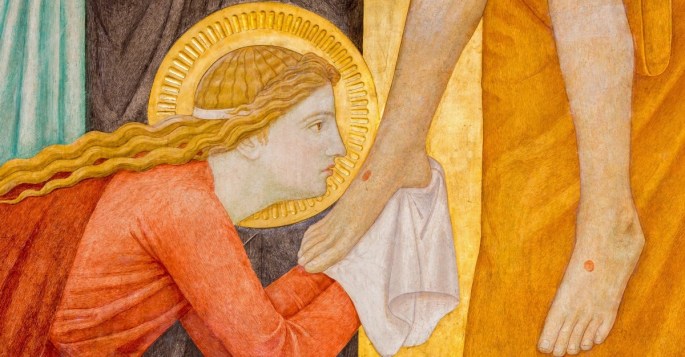
On Sunday, we heard the story of the Resurrection. We heard how the male disciples fled upon finding the empty tomb, but how Mary Magdalene stayed, and how she wept. Jesus found her there, called her by her name, and sent her out to proclaim the good news. Today we hear how her astonishing report, her idle tale, as it was referred to in Luke, was denied and mocked by the disciples and the men who followed Jesus. This denial would become an early omen of Mary’s ultimate fate in the church – her recasting as the unnamed prostitute and sinner who repented with ointment at the feet of Christ. I would note that Pope Gregory’s construction of this woman, the “composite Mary Magdalene,” was the perfect way to rip away her power and witness as a female disciple and apostle. For more than a millennia after his famous 33rd homily, she was consigned as a whore – according to the church and the pervading culture, the very worst a woman could be.

I chose today to preach because Mary Magdalene is a saint very near to my heart.


Continue reading “Homily for St. Mary Magdalene”