Sunday, March 3, 2019
A sermon on 2 Corinthians 3:12-4:2 and Luke 9:28-36
This past weekend, the United Methodist Church gathered here in St. Louis for a special meeting of their General Conference. UMC delegates traveled from across the country and the world to this state to meet and try to find a way forward on issues of human sexuality – specifically, on the questions of the ordination of gay clergy and same-sex blessings. As a community, they heard testimonies and proposals, and voted on the future of their church. They were open and vulnerable with one another. They said and heard difficult things.
As you may have learned, the outcome of their meeting, though unsurprising, was a disappointing reminder of the divisions that still exist within the body of the church, and of the desire of many to stem the flow of progress toward full inclusion of all God’s children in the life and work of the Church.
We are here this weekend to celebrate Christ’s transfiguration: a joyous occasion, a true miracle. This morning, we tell the story of the Son of Man, revealed in his glory to some of his dearest friends. This is a story of amazement, of God’s beauty and power, of Jesus truly seen for all that he is – our savior and our king. But I cannot help that, as I prepared to speak today, my mind kept returning to the Methodists, and to the events of last weekend.
You may know that I am a member of the Deaconess Anne House, an Episcopal Service Corps program based in St. Louis. At DAH, as we affectionately call it, Kevin, Madison, Shelton, and I work to sustain an intentional Christian community formed by our Rule of Life. In our Rule of Life, we promise to live by certain values; these values help guide our hearts, minds, and actions as we live, work, and pray side-by-side. One of these values, one that shapes our community quite profoundly, is vulnerability. Vulnerability comes up in the smaller, inevitable snags of community life – disputes about the dishes, for example. But it also emerges in the larger moments — in opportunities for sharing about our own joys and struggles, in asking for help, in holding grief and disappointment together as a community. Vulnerability is one of the toughest values to live out, but one whose fruits are bright and bountiful.
I bring it up this morning, not to speak at length about chore squabbles or even the spirituality of Deaconess Anne House, but because I believe vulnerability represents an important connection between what occurred at the UMC General Conference and the story we heard today of Christ’s Transfiguration.
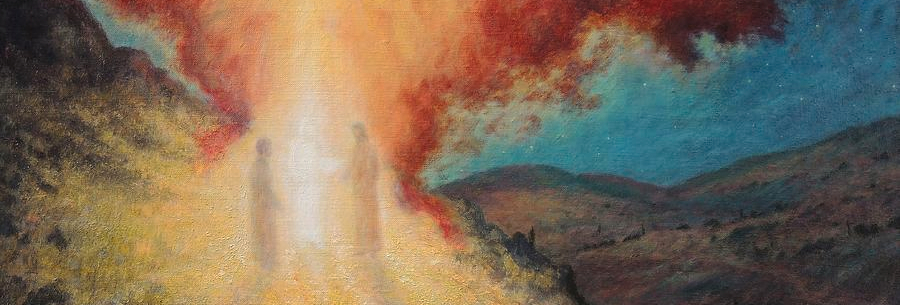
The Transfiguration is one of those incidents in the Gospels that seems almost unworldly. There is Jesus, dazzling white, his face transformed and filled with glory. There are the prophets, Moses and Elijah, casually speaking with him of his future trials. There is the voice of God and that second proclamation – “this is my Son, my Chosen!”. There is all of this amazing, mystical stuff… and then there are the two disciples, Christ’s dear friends: scared out of their wits, scrambling for tent poles and completely lost.
They are lost because this is, of course, Jesus seen for the first time as he truly is. This is Jesus vulnerable and open. This is Christ, who bestowed upon his friends enough sacred trust to bring them on this mysterious trek up the mountain and to rip off his veil, so to speak, to show them much of what he has been hiding: his glory, which is nearer than they could have even imagined. I have been told, by those more learned and clever than I, that the Hebrew word “glory” chosen here by Luke has a strange meaning: it translates roughly to “weight,” or “heaviness.” Christ may be dazzling white, bright and divine, but this moment, and that which is revealed, is more than just holy and pure: it is heavy, it is weighty, it is hard.
This is demonstrated, I think, by the response of the disciples to Christ’s revelation. They are at a loss when presented with Jesus’s vulnerable self – they do not understand. They are thinking of tents, and safety. Shortly, upon descent, they are thinking about which of them is the greatest, and looking at Jesus dumbfounded when he predicts his own death. Christ’s transfiguration, Christ’s vulnerable revelation, is weighty, and hard, and the disciples are just too confused to begin to understand it or appreciate it for what it is.
This brings us to the Methodists, and the very difficult conference they held here in St. Louis last weekend. If you are not familiar with this conference, or the history of homosexuality in the UMC, I’ll give you a brief summary. I am by no means an expert, only a bystander, so please forgive me if I simplify what ought not to be simplified, or make a mistake in my explanation.
Unlike the Episcopal Church, the UMC is a global church. In the canons of the tradition, the UMC prohibits the ordination of so-called “self-avowed practicing homosexuals.” However, despite this rule, some areas of the church have, for some time, been operating more progressively, ordaining gay and trans folks and even doing same-sex wedding blessings. Most recently, a partnered lesbian was made a bishop here in the US. Some regional conferences have voted in favor of full inclusion for LGBT members and clergy and proceeded based on this vote; others have continued to uphold the church’s canon.
The UMC gathered in St. Louis last weekend to attempt to bridge this gap, to discuss how they could proceed given the significant differences in perspectives on human sexuality found throughout their denomination. They met to confront this issue on an international stage. This meeting required great vulnerability from members of both sides of the issue, but especially from gay individuals in the church, lay and ordained, who stood up on behalf of themselves and their LGBT siblings, told their stories, and asked the church to finally fully include them in its holy life and work. Like Christ, they revealed themselves as they truly were, bestowing sacred trust in those gathered that their stories would be understood, and sacred hope that their vulnerable selves and souls, laid bare for the Church to see, would finally be welcomed as holy and good and loved. It was heavy, it was weighty, it was hard.
But, as with Christ, as with so many who risk opening up and pulling back the veil, who choose to no longer hide, this act of vulnerability was not understood or appreciated for what it was. Individuals and communities within the UMC chose to continue to reject these gay folks and the communities they represented, to focus on fear instead of love, to hide in tents instead of gazing upon the glory and truth found in the testimonies offered.
Thankfully, today we hear not only from Luke, but also from Paul. And Paul offers here a bit more hope to our story. Speaking about Christ’s transfiguration, Paul promises us, not understanding, not even victory, but this: open yourself up, listen as your neighbor shows you who he truly is, look at yourself and your community unveiled and unhidden, and you will begin to see fragments and shimmers of God’s glory all over. Like Christ, like the UMC, we must then move forward, down the mountain and toward the cross. But let us remember, as we do, that we are traveling by reflected light, by hints of God’s glory. This light will sustain us – this light, after all, is Christ’s gift to us.
Sisters and brothers, the glory of God is very near. Let us go forth.
 To Marvelous Light