Embodiment and the Christian Life

Wednesday, December 5, 2018

A sermon on John 6:53-63

In reading the Gospels, it can often be easy for us to playfully mock Christ’s disciples when they seem to ask stupid questions of him, or miss his point on core theological issues. But I think I can speak for a lot of folks in saying that I find myself sympathetic to the disciples in this passage as they question Jesus again on his teaching concerning the Eucharist and the physical consumption of his body and blood. “This teaching is difficult,” they say. And indeed it is! Debates about sacramental theology aside, there is something very challenging in what Christ is saying here, and in his repeated assurance that no, he is not speaking metaphorically about his flesh and blood.

Continue reading “Embodiment and the Christian Life”

Sermon for Two Lost Sons

Sunday, March 6, 2016

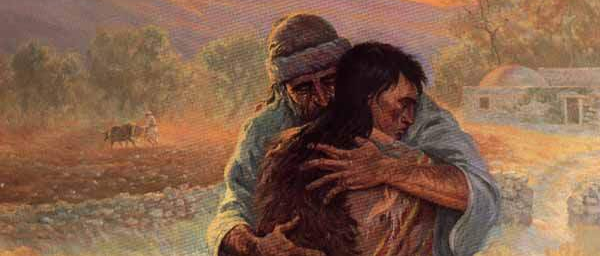
The story of the Prodigal Son is one of my favorite stories in the New Testament, and I think that’s because it says so much about the nature of God and his love for us. The love embodied by the father in the story is an active love, a ferocious love. Even before the son in the story has asked for forgiveness, his father literally runs to him. He throws his arms around his son, despite the fact that he has just come directly from a pig sty. He doesn’t say, hey, clean up and then we can hug. Or hey, what do you have to say for yourself? No, he embraces his son. He gets the dirt and mud of his son’s past all over himself. He brings his son into the house and throws him a party to celebrate his homecoming.


Continue reading “Sermon for Two Lost Sons”

God Is Already There: A Sermon on Kalaupapa

Sunday, June 24, 2018

Before my summer intern trip to Kalaupapa, whenever I mentioned to someone here in Hawaii that I was to have the opportunity to visit the Settlement there, I was met with a similar, striking response: I was told that Kalaupapa is a very spiritual place, and that my visit would be transformative. For a while, I felt confused by this sentiment. Of course, the island and the peninsula are beautiful, and the stories of what happened there – the cruelty, the pain, and the isolation – are haunting.

But wouldn’t a better descriptor for the place be something like, heavy? Dark? Intense? Is it the fact of the suffering, I thought, that makes this place so spiritual for so many people? You don’t hear folks describe other historical sites this way. What about or in Kalaupapa, I wondered, inspires such a strong sense of the sacred?


Continue reading “God Is Already There: A Sermon on Kalaupapa”

Homily for St. Mary Magdalene

Wednesday, April 5 2018

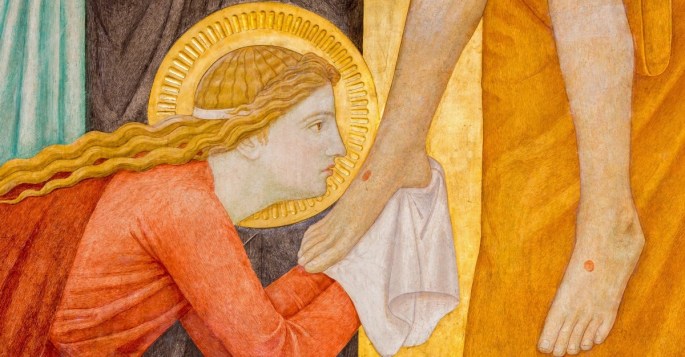
On Sunday, we heard the story of the Resurrection. We heard how the male disciples fled upon finding the empty tomb, but how Mary Magdalene stayed, and how she wept. Jesus found her there, called her by her name, and sent her out to proclaim the good news. Today we hear how her astonishing report, her idle tale, as it was referred to in Luke, was denied and mocked by the disciples and the men who followed Jesus. This denial would become an early omen of Mary’s ultimate fate in the church – her recasting as the unnamed prostitute and sinner who repented with ointment at the feet of Christ. I would note that Pope Gregory’s construction of this woman, the “composite Mary Magdalene,” was the perfect way to rip away her power and witness as a female disciple and apostle. For more than a millennia after his famous 33rd homily, she was consigned as a whore – according to the church and the pervading culture, the very worst a woman could be.

I chose today to preach because Mary Magdalene is a saint very near to my heart.


Continue reading “Homily for St. Mary Magdalene”

An Idle Tale: Mary Magdalene in the Ancient Church

In the Gospel of John, Mary Magdalene is the first to encounter the risen Christ. After the male disciples have returned to their homes, she weeps at the tomb alone, telling the two angels there, “They have taken away my Lord, and I do not know where they have laid him.”[1] She turns and sees Jesus, though she does not know it is he, and pleads with him: “Sir, if you have carried him away, tell me where you have laid him, and I will take him away.”[2] Mary is desperate, seeking and grieved. But Jesus reveals himself by saying her name, and she responds with joy: “Teacher!”[3] It is a sweet tale, full of grief and hidden expectation, full of the persistence of a follower of Christ who refuses to give up on his promise. It is also, however, not the story most will conjure up when thinking of Mary Magdalene.

The repentant whore, the woman with the alabaster jar, the lady of seven vices, the sinful woman – Mary has collected many names in the Christian world over the past two thousand years. But none, it turns out, is an accurate portrayal of Mary. A close analysis of the text of the New Testament, especially the Gospels, reveals no connection between Mary Magdalene, from whom seven demons were removed, and the prostitute, who anoints his feet before the crucifixion. Scholars studying ancient sources both canonical and non-orthodox agree that Mary Magdalene was actually an important, non-prostitute figure in Jesus’ ministry, most certainly in appearance at his crucifixion and, according to tradition in almost all texts that mention her, at the tomb to encounter him in his risen form after the resurrection.[4]


Continue reading “An Idle Tale: Mary Magdalene in the Ancient Church”